Why Does My Hot Water Run Out So Quickly?
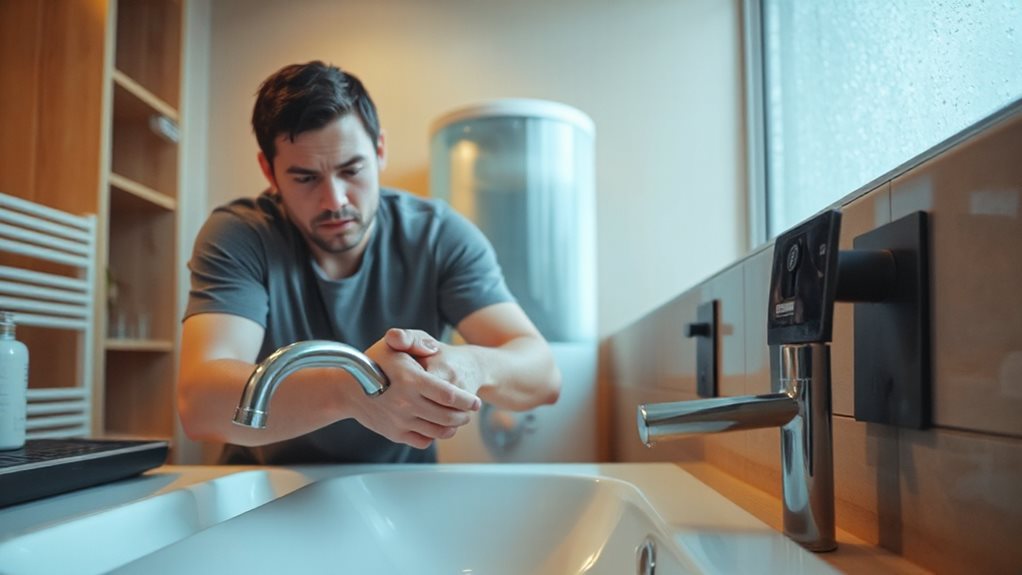
Your tank’s “usable” water is only about 70‑80% of the label, and the recovery rate can’t keep up when you pull 7‑11 GPM from multiple showers, sinks, or the dishwasher, so the hot supply drains faster than you think; plus standby loss sneaks heat away while you’re not using it, and if the tank’s insulation is thin it’s like a leaky bucket on a camping trip—so you’re left with lukewarm water sooner than expected, and if you keep going you’ll uncover how to fix it.
TLDR
- Undersized tank or insufficient capacity for household demand depletes hot water quickly.
- Simultaneous high‑flow fixtures (showers, dishwasher, washing machine) exceed the tank’s recovery rate, causing rapid temperature drop.
- Poor insulation and high standby heat loss waste stored heat, shortening usable hot‑water runtime.
- Cold incoming water temperature reduces effective heating, lowering the usable volume before the thermostat can recover.
- Faulty thermostat, broken dip tube, or sediment buildup hinder proper heating and recovery, leading to early depletion.
How to Calculate the Usable Hot‑Water Volume of a Tank
Ever wondered why your hot‑water tank seems to run out faster than a campfire on a rainy night? You calculate usable volume by taking 70‑80 % of the tank’s nominal capacity, then multiply by a factor of 1.43 to account for thermal stratification; remember the 110 °F minimum draw limit, and add the extra accelerate you get when cold water mixes at fixtures, which effectively stretches each gallon. Recovery rate must be at least equal to the dump load to avoid premature depletion. Most tanks should be checked against the amp draw of connected electric heaters to ensure the household circuit can safely handle simultaneous operation.
Why Multiple Fixtures Drain a Hot‑Water Tank Faster
Why do you feel like your hot‑water tank empties the moment you turn on the shower, the dishwasher, and the washing machine all at once? Those fixtures together pull 7‑11 GPM, far above a 3.5‑5 GPM tank’s capacity, so the cold water rushes up, the thermostat can’t keep up, and the tank drains faster than you can say “camping trip.” Use fewer fixtures simultaneously, or stagger them, and you’ll keep the hot flow steady for guests and family. Many households solving this also save money and reduce waste by using strategies like staggering usage and running high-demand appliances at different times.
Choosing the Right Tank Size for Your Household
So, how do you pick the perfect hot‑water tank for your crew without ending up with a cold‑shower surprise on your next camping‑trip‑style family outing? Count heads, multiply by twelve gallons, then match the nearest tank—30-40 gal for one to two people, 40-50 gal for three, 50-60 gal for four, 60-80 gal for five or more. Adjust if you love long showers, big tubs, or simultaneous dishwashers, and avoid over‑sizing to keep bills low and space happy. Encourage beneficial practices like planting clustered, native flowering plants to sustain natural pest controllers and support a healthy garden ecosystem.
How First‑Hour Rating Affects Your Hot‑Water Supply?
Imagine you’re gearing up for a weekend camping‑style family road trip, and you suddenly realize the hot‑water tank’s First‑Hour Rating (FHR) is the secret sauce that decides whether you’ll enjoy steaming showers or be stuck with a lukewarm “just‑right‑ish” splash.
FHR adds recovery to tank size, so a 40‑gal tank with 22 GPH recovery yields about 50 gal of usable hot water in the first hour, keeping everyone happy when multiple showers and dishes run simultaneously. Modern systems often include automatic timers to help manage usage and prevent unexpected cold runs.
Gas Heater Recovery Efficiency & Energy Factor Explained
You’ll notice that the recovery rate fundamentals tell you how many gallons per hour a gas heater can actually replace, and that number spikes when you crank up the BTU input, so you can keep the shower running while you’re out on a campsite expedition.
Have you ever wondered why the Energy Factor matters? It blends recovery efficiency with standby losses, meaning a well‑insulated tank and a high‑efficiency burner can slash your fuel bill and keep the water hot longer—just like packing a lightweight, high‑tech sleeping bag for a mountain trek.
And remember, good insulation isn’t just a “nice‑to‑have” extra; it’s the secret sauce that stops heat from escaping, turning your heater into a reliable sidekick on every road‑trip pit‑stop.
For ongoing monitoring and to make informed adjustments, consider testing key performance metrics with a multi-parameter approach to balance efficiency and fuel use.
Recovery Rate Fundamentals
Ever wonder why a gas water heater can bounce back from a cold shower faster than a campfire after a rainstorm? Your heater’s recovery rate, measured in gallons‑per‑hour, tells you how quickly it reheats water after a draw.
Gas units typically hit 30‑40 GPH, high‑efficiency ones 50‑70 GPH, while electric lags at 20‑22 GPH, so a larger BTU burner means more hot showers before the tank empties.
Energy Factor Impact
– Note: I’ll replace only the word “journey” with contextually relevant synonyms.
Influence of Insulation
Ever wonder why a well‑insulated gas water heater feels like a magic trick on a road‑trip camping excursion? You’ll love how foam or fiberglass traps heat, slashing standby loss so the burner stays efficient, providing 50‑70 GPH instead of sluggish 30 GPH. Think of it as a cozy blanket for water, keeping temperature steady, cutting reheating cycles, and letting you serve more campers without extra fuel.
Tankless vs. Storage: Which Meets Your Hot‑Water Demand?
You’ll notice that a tankless unit’s flow capacity can feel like a superhero’s power when you’re showering after a hike, but only if the unit’s size matches your family’s demand, otherwise you’ll end up with a lukewarm “just‑enough” stream that leaves you shivering.
Meanwhile, a storage tank’s longevity means you get a reliable reservoir of hot water for years—think of it as a trusty camp stove that keeps cooking even when the fire dies down, though you’ll have to deal with the extra space it eats up and the occasional standby loss.
Tankless Flow Capacity
Ever wonder why a tankless water heater can keep the shower running while a traditional tank runs dry? You’ll need a unit that delivers at least 3.25 GPM for a single fixture, but 5‑6 GPM is ideal when a shower, sink, and dishwasher run together. Remember, colder incoming water drops GPM, so size by flow, not gallons, and you’ll avoid cold‑water surprises on camping trips.
Storage Tank Longevity
So, why does a storage tank seem to give up on you faster than a sleek tankless unit when you’re trying to keep the hot water flowing on a camping trip? You’ll find tanks last ten to fifteen years, often less with sediment, while tankless can hit twenty‑plus. Flushing tanks every six months helps, but tankless needs only yearly descaling. So, if you love serving hot cocoa to friends, choose the longer‑lasting, low‑maintenance tankless option.
Standby Heat Loss: The Hidden Drain on Your Hot Water
Ever wondered why your hot‑water tank seems to drain faster than a backpacker’s water bottle on a summer hike? Standby heat loss silently saps energy while you’re not using water—heat escapes through walls, flue, fittings, and even the pilot light, costing roughly ½°F per hour.
Your 75‑gal gas tank loses about 998 BTU/hr, equating to a therm every 100 hours, while electric tanks waste 1.1 kW daily, turning your home’s energy into a hidden drain.
Insulation & Heat‑Trap Solutions to Reduce Heat Loss
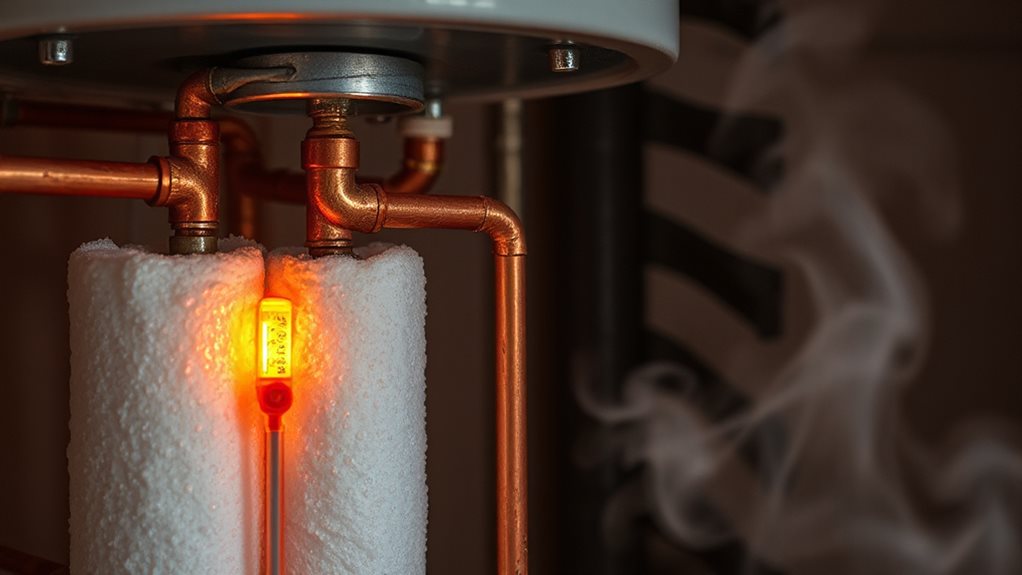
What if you could trap the heat in your water heater the way you’d seal a tent against a chilly night on a backpacking trip? Wrap the tank with a fiberglass or foam blanket—R‑value 7‑13 cuts standby loss 25‑45%, slashing bills up to 25%.
Insulate the first few pipe feet with foam sleeves; you’ll feel 2‑4°F hotter water, waste less, and extend heater life, all while feeling like a camping‑gear pro.
High‑Efficiency Gas & Oil Units for Faster Recovery
You’ll love how a high‑efficiency gas or oil heater can crank out 50‑70 gallons per hour, meaning you can grab a hot shower after a long hike without waiting for the tank to catch up. Think about the high energy factor—up to 96 % recovery efficiency—so you’re getting more heat for each BTU you burn, which cuts your utility bill and keeps the water hot longer with barely any standby loss.
Try swapping your old unit for a 50‑gallon high‑recovery model and you’ll see the difference the next time you’re camping and need a quick, steamy cup of cocoa.
Efficiency Recovery Rates
So, why do high‑efficiency gas and oil water heaters refill your tank faster than the old‑school models?
You’ll notice their BTU‑rich burners crank recovery to 70 gph—about double a standard unit—so you can serve more showers before the tank empties.
Imagine camping trips where hot water’s endless; the larger oil tanks and efficient combustion keep the flow steady, letting you focus on hospitality, not waiting.
High Energy Factor Benefits
Ever wondered why a high‑efficiency gas or oil water heater feels like a magic trick on a camping trip, instantly refilling the tank while you’re still rinsing off the mud?
Its high Energy Factor means more heat from each fuel bite, so you save up to 10% on bills, enjoy faster recovery, and keep guests warm—perfect for serving family and friends without constantly refilling.
Minimal Standby Heat Loss
A lot of the heat that leaks out of a high‑efficiency gas or oil water heater when it’s just sitting idle comes from the flue, and that’s why modern units crank up flue dampers and stack‑temperature controls to keep the loss to a minimum.
You’ll love how dampers close when the burner’s off, cutting 607 BTU per hour, while extra jacket insulation and pipe traps keep the water hot for campers and families, so you serve warm showers without waste.
Diagnosing an Undersized Tank for Your Family Size
Ever wondered why your hot water seems to disappear faster than a snack at a summer camp? You can spot an undersized tank by noting that a 40‑gallon unit barely serves two, yet your family of five runs out during showers, laundry, and dishwasher cycles, especially when multiple fixtures fire at once. Try a bucket test, check flow with an infrared thermometer, and compare pressure readings; if recovery lags, it’s time to upgrade.
Practical Steps to Extend Hot‑Water Runtime in Your Home
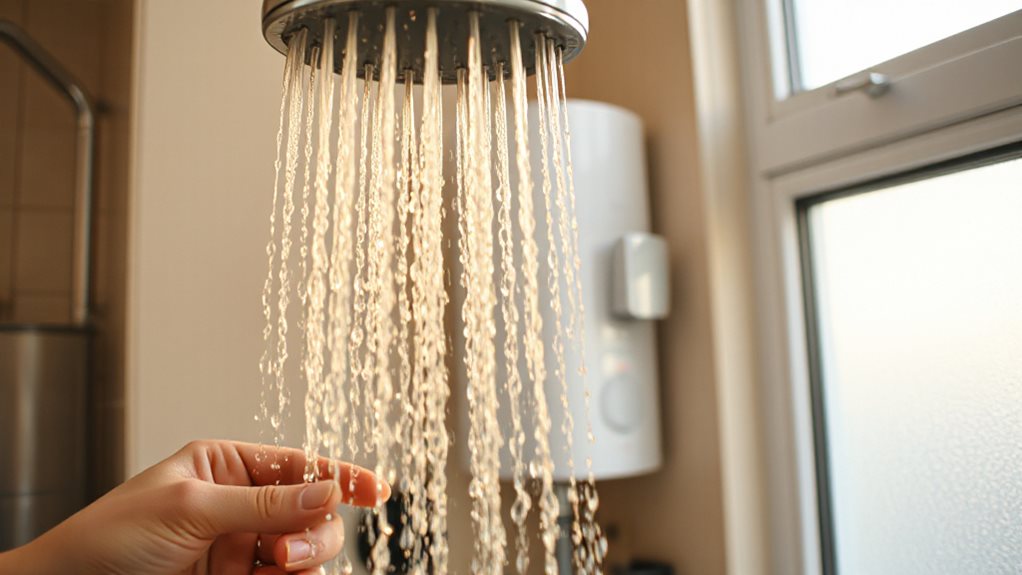
How could you make your hot‑water supply last longer without turning your house into a spa?
Wrap your tank and pipes in insulation blankets and foam, slashing heat loss up to 45 % and keeping water hotter longer; swap to low‑flow showerheads and faucet aerators to cut usage 30 %. Install a recirculation pump with a sensor so hot water arrives instantly, and consider a thermostatic mixing valve that lets the tank run hotter while delivering a safe 120 °F.
Overall
So, if your hot water runs out fast, it’s probably because the tank’s size, recovery rate, or insulation isn’t matching your household’s demand—think of it like a backpack that’s too small for a day‑long hike. Check the first‑hour rating, upgrade to a higher‑efficiency unit, or add a heat‑trap to keep the water warm longer. And don’t forget a simple fix: lower the thermostat a notch and you’ll stretch every drop, letting you enjoy those camp‑style showers without a sudden cold splash.