Why Do Wasps Build Nests Under Decks?
You’ll find wasps love the underside of decks because it’s a warm, dry, hidden spot—perfect for a queen surveying a safe cabin to start her colony, especially after a rainy summer when the wood stays cozy, the cracks act like secret doors, and the sun‑warmed microclimate feels like a tiny tropical getaway; plus, nearby food spills, trash, and garden pests give them a buffet, so they settle in, build a walnut‑sized paper nest, and keep expanding. Keep reading and you’ll uncover how to stop them.
TLDR
- Deck undersides offer sheltered, quiet microclimates protected from rain, wind, and direct sunlight.
- Cracks, gaps, and the space between joists provide easy entry points and hidden building sites.
- The warm, sun‑warmed wood under decks creates an ideal environment for nest construction and brood development.
- Nearby gardens, compost, and organic debris attract prey, making deck areas rich feeding grounds for wasps.
- Seasonal activity peaks—queen scouting in spring and colony expansion in summer—coincide with deck exposure, encouraging nesting there.
Why Wasps Nest Under Decks and How to Stop It
Ever wonder why wasps love to set up shop under your deck? You’ll find they’re territorial, craving quiet, sheltered spots shielded from rain and wind, where sun‑warmed wood creates a perfect microclimate, and cracks or gaps give secret entry points near gardens, trash, and picnics. Ground underneath also provides an appealing site for nesting. Increasing nearby soil health and organic matter can unintentionally make such spots more attractive to nesting insects. To stop them, seal cracks, hang peppermint decoys, and keep food away—simple steps that protect your space and your campers.
How Seasonal Changes Trigger Deck‑Based Wasps Activity
Why do wasps seem to pop up under your deck right when the weather starts to warm up? As spring’s queen awakens in April, she scouts sheltered undersides, then builds a nest while blossoms fuel rapid growth; summer’s heat and longer days swell the colony, prompting aggressive foraging, and autumn’s dwindling food sparks frantic, defensive behavior that you’ll notice buzzing around your deck. Planting aromatic herbs like rosemary and lavender nearby can help mask scents and attract beneficial insects that reduce overall pest activity, serving as a fragrant shield to nearby structures.
Deck Design Features That Invite Wasps to Nest
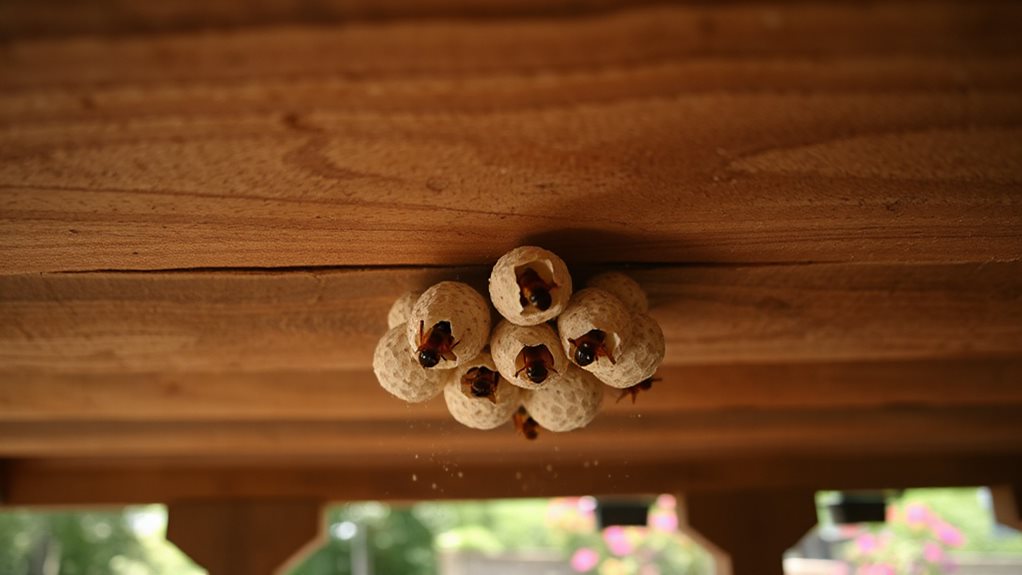
When spring warms up, you’ve probably noticed wasps buzzing around the underside of your deck, and that’s not a coincidence—those same seasonal cues that fire up the colony also make certain deck designs irresistible nesting sites. Overhangs, tight board gaps, dark corners, and weathered wood all create sheltered, warm microclimates and easy entry points, so your deck unintentionally becomes a wasp hotel. Many homeowners can reduce nesting by addressing sheltered, warm microclimates and sealing entry points.
How Food and Drink Spills Around Decks Attract Wasps
So, imagine this: you’ve just set down a cold soda on the deck after a sunny hike, and before you even notice, a few curious yellowjackets are already buzzing around the sticky ring of sugar.
The spill releases scent, scouts sniff it, then spray pheromones, calling others; crumbs, meat drips, and open cans do the same, turning your deck into a nonstop buffet that draws wasps for hours. Clean up fast! UV rays and moisture can also make decks more attractive by degrading surfaces and trapping food scents on roughened wood, so protect and seal your deck with pigmented stain to reduce lingering odors.
Identifying the Common Wasps Species That Choose Decks
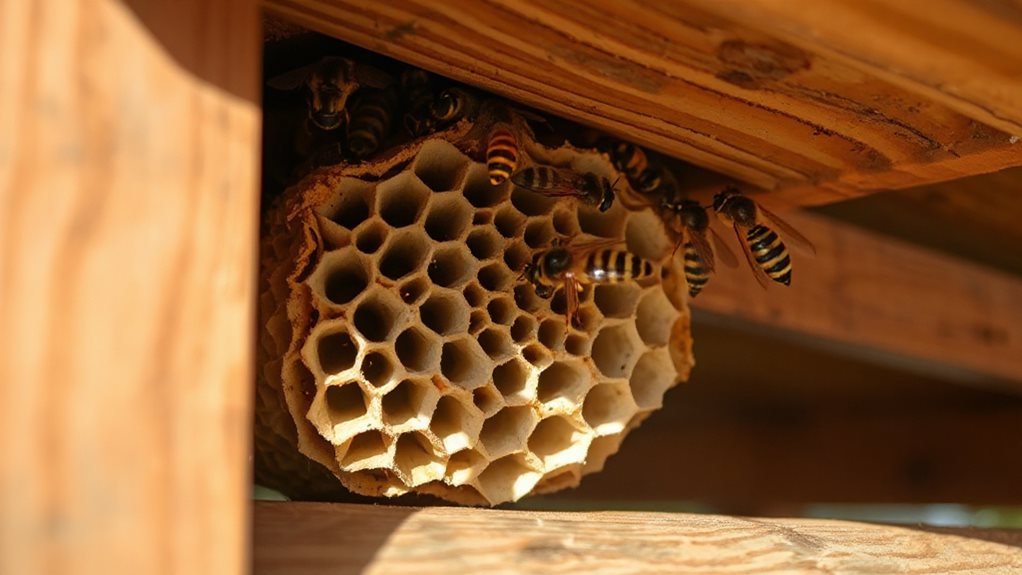
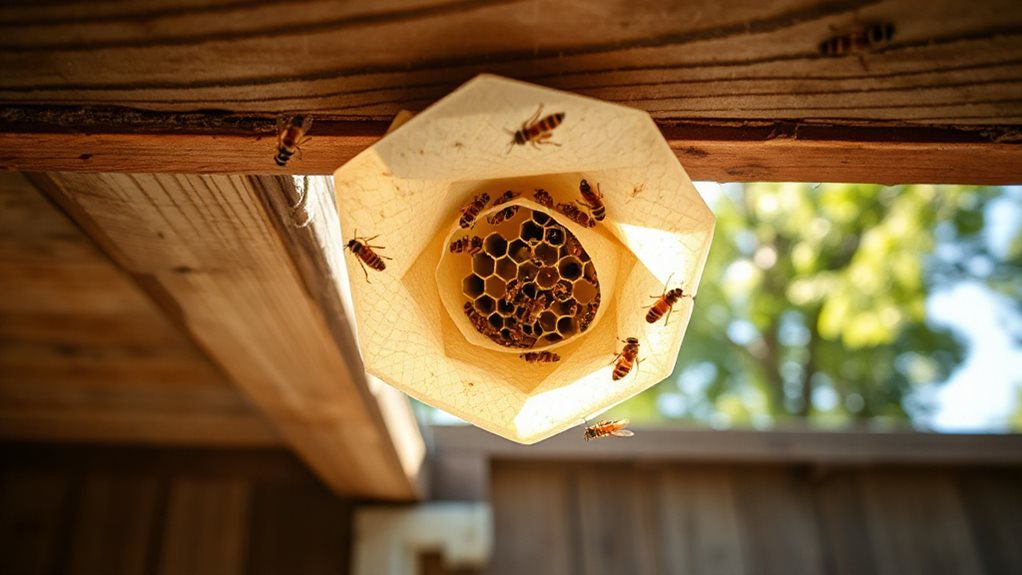
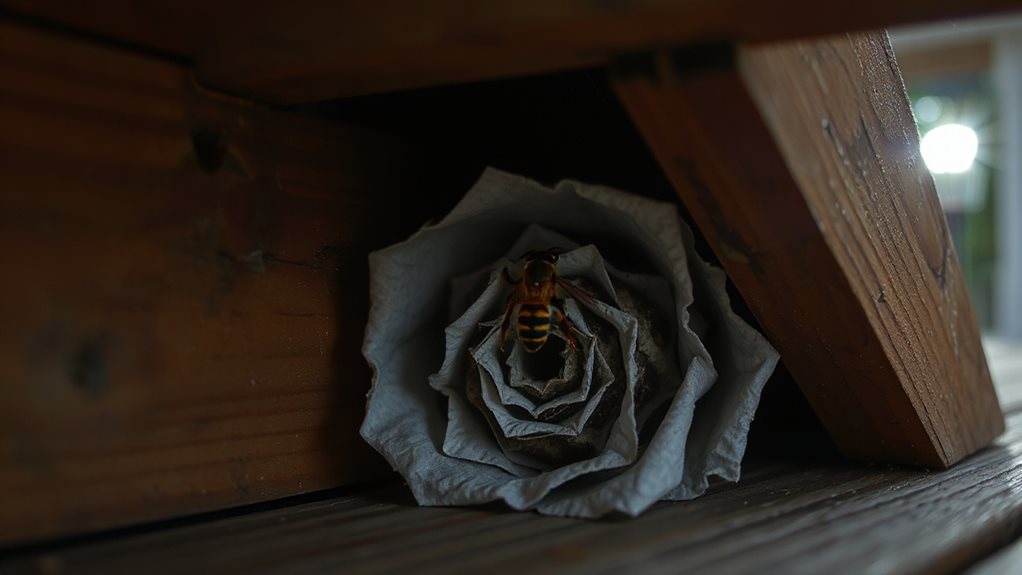
Ever wondered which wasp species love to claim the space under your deck as their private hangout? You’ll spot yellowjackets building paper‑like pulp umbrellas that can swell to basketball size, paper wasps with open honeycomb crowns, bald‑faced hornets crafting grey football‑shaped nests, mud daubers stacking tube‑like mud clusters, and solitary digger wasps tunneling in smooth, shiny bodies—each choosing decks for shelter and easy access. Compost adds nutrients and attracts prey that can draw wasps to garden areas, so consider managing organic matter around decks to reduce appeal.
How Queens Initiate a Nest Beneath Your Deck
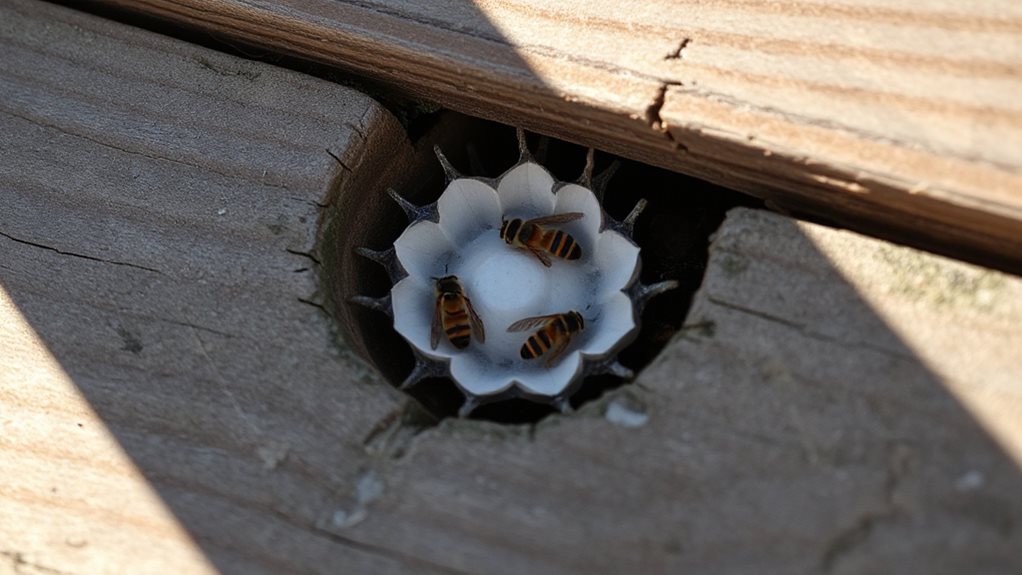
When the spring sun finally warms the air above ten degrees, you’ll see the queen’s first flight as she buzzes out of her winter hideout, scouting for that perfect, secret spot under your deck—think of it as her own tiny campsite, complete with a shady overhang and a cozy microhabitat. You might wonder why she picks that hidden nook, but it’s because the dry, protected space mimics the natural hollows she’d choose in a tree, giving her a safe launchpad to start chewing wood fibers and saliva into a papery pulp for her first “golf‑ball‑sized” nest. So, picture her buzzing around like an adventurous camper, and remember to keep an eye out for those tiny, paper‑lantern cells before the whole colony turns your deck into a bustling summer resort.
Queen’s First Flight
Ever wondered why a queen wasp decides to set up shop right under your deck? You’ll see her launch her first flight at dusk, scouting cool, shaded cracks like a tiny explorer, humming with excitement. She follows scent trails, lands, then slides into a hidden crevice, ready to lay eggs and recruit workers—your deck becomes her cozy campsite, instantly buzzing with purpose.
Selecting Hidden Microhabitat
Curious how a queen wasp picks the perfect hidden spot under your deck? You’ll find she scouts dry, sheltered cracks, feeling the warm 10 °C air, listening for human footfall, then chews nearby wood fibers into pulp, builds a tiny golf‑ball nest, and releases pheromones to claim it; this microhabitat protects eggs, limits predators, and lets her colony grow unnoticed.
How Wasps Turn Wood Fibers Into Paper‑Like Nests
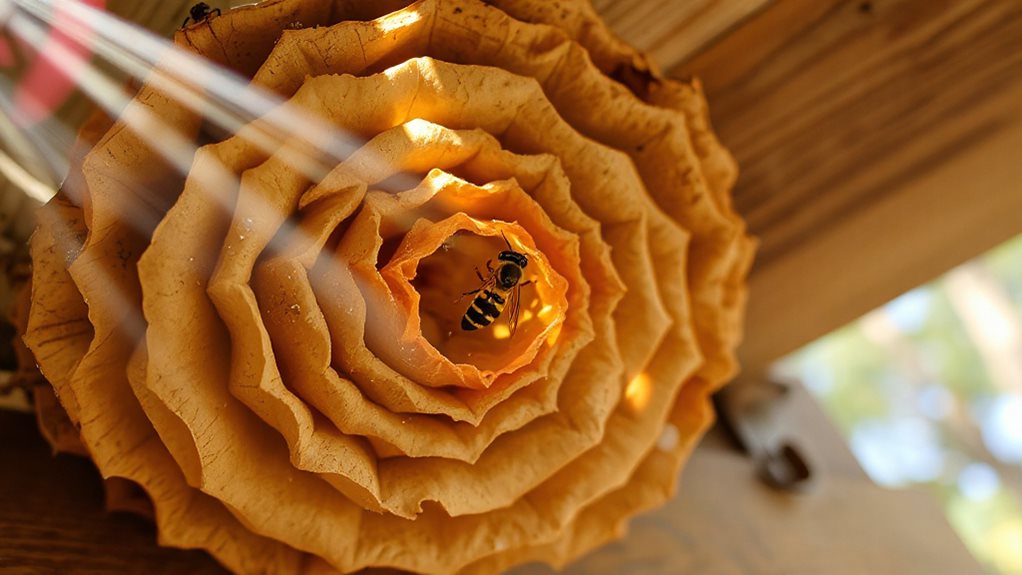
You’ll notice the wasps start by chewing up dead wood from your deck, turning those rough fibers into a fine pulp that they mix with their own sticky saliva, creating a sort of natural papier‑mâché; isn’t it wild how they turn a simple fence post into a building block?
As they spread this pulp, they line up the fibers in neat, parallel layers, pressing each sheet down until it looks and feels like smooth construction paper—think of it as a tiny, ultra‑lightweight craft project happening right under your feet.
Next time you’re camping, imagine watching those tiny architects work, their mandibles snapping like tiny scissors, and you’ll see how quickly a sturdy, paper‑like nest can take shape, all thanks to that clever wood‑fiber‑and‑saliva recipe.
Wood Fiber Extraction
When you spot a wasp nest tucked under a deck, you might wonder how those tiny builders turn dead wood into a paper‑like structure, and the secret starts with their picky wood‑selection habits—dead, weather‑worn planks, fence panels, or even old garden stakes are their go‑to, because the soft, UV‑damaged fibers need far less chewing power than fresh timber. You watch them bite along grain, mandibles grinding wood into fine pulp, then mix it with saliva, creating a pliable paste that dries fast, water‑proof, and forms perfect hexagonal cells for the colony.
Saliva‑Mixed Pulp Formation
Ever wonder how a wasp can turn a gnarly piece of dead wood into a paper‑thin, water‑proof nest that looks like it was built by a tiny designer on a camping trip? You’ll see it mix saliva—rich in proline glue—with shredded fibers, then spread the sticky pulp. It dries fast, forming an irreversible, water‑repellent matrix that bonds fibers into lightweight, hexagonal paper, perfect for protecting eggs while you enjoy your own campsite adventures.
Rapid Paper Nest Construction
Ever wondered how a tiny wasp can turn a handful of shredded wood into a paper‑thin, water‑proof nest faster than you can set up a tent? You’ll see the queen chew wood fibers, then workers layer those pulp‑like pieces like a typewriter, building hexagonal cells and a sturdy envelope.
Their strong mouthparts mash bark, pine bits, even cloth, creating a rapid, paper‑like structure that expands from golf‑ball to football size in weeks.
How to Spot a Growing Wasps Nest Under Your Deck
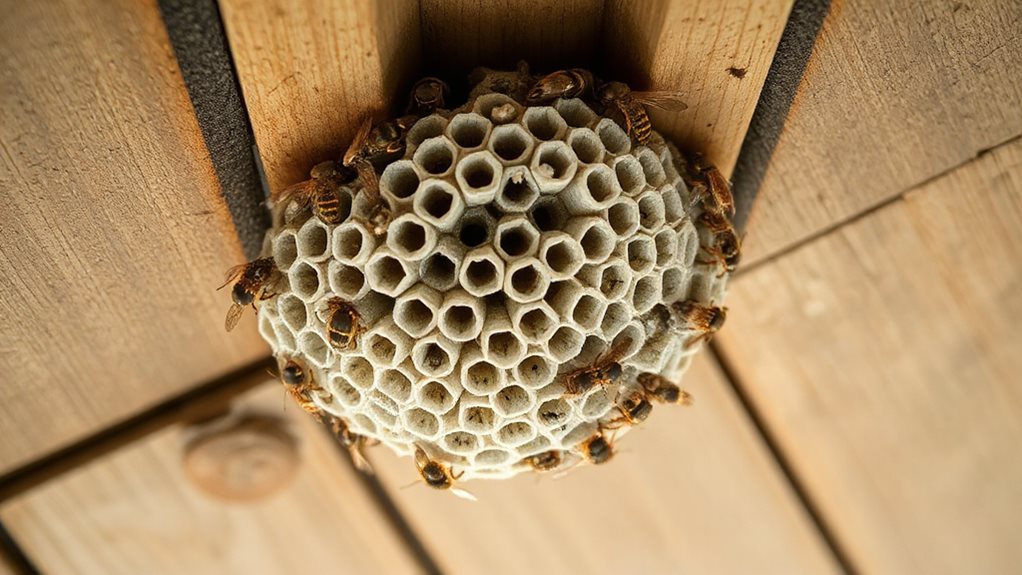
Ever wonder why a buzzing swarm seems to hover right under your deck, like tiny, angry tourists looking for a campsite? You’ll spot them by watching sudden traffic through deck gaps, listening for a constant hum, and spotting papery, umbrella‑shaped clusters on joists. Look for tiny walnut‑sized nests expanding, chewed wood, and small holes that become busy entranceways as the colony grows.
What Safety Risks Do Deck‑Based Wasps Nests Pose?
So, what exactly can go wrong when a wasp colony decides to set up shop right under your deck?
You’ll risk painful, swelling stings, especially if multiple wasps attack, and allergic folks could face life‑threatening anaphylaxis—about 72 U.S. deaths each year.
Heavy foot traffic near the nest invites accidental swarms, while late summer colonies swell to hundreds, making every step a potential sting hazard.
How to Safely Remove a Deck‑Based Wasps Nest
You’ll want to start by slipping on a sturdy pair of gloves, a face shield, and maybe even a light jacket—because nothing ruins a camping‑trip vibe like a sting, and I’ve learned the hard way that proper gear is the first line of defense.
Next, pick an insecticide that matches the nest size and location; I usually go for a spray that reaches at least fifteen feet, which lets you stay a safe distance while still getting the job done, so why not grab a bottle and give it a good shake before you head out?
Finally, once the wasps are knocked out, carefully bag the whole nest, seal it up, and toss it in the trash—think of it as packing up your campsite after a night under the stars, only this time you’re packing away a buzzing souvenir.
Assess Protective Gear
How can you feel like a superhero while tackling a wasp nest under your deck? Slip into a full bee suit with veil, zip coveralls over boots, and wear thick leather gloves that hug your wrists—think of it as armor for a camping expedition.
Layer long sleeves, pants, and a heavy coat, seal every gap, and keep your escape route clear; you’ll stay safe, sound, and ready to protect others.
Choose Appropriate Insecticide
Ever wonder which bug‑killer will turn your deck‑under‑wasp‑nest mission into a smooth, almost‑camping‑trip excursion?
Pick a wasp‑specific aerosol with a 15‑foot range for safe distance, or dust for enclosed nests so they haul it inside.
Try soapy water at dusk for a non‑toxic option, and always read the label, wear your gear, and work when wasps are quiet.
Dispose Nest Safely
When the night’s cool air finally settles and the wasps have retreated into their hidden deck‑under home, that’s the perfect moment to tackle the nest—because the insects are far less aggressive after a long day of buzzing, and you’ll feel like a secret‑mission camper sneaking into a campsite after sunset.
Wear full gear, use a stick to pry the dead nest into a sealed bag, then toss it far away in an outdoor bin, keeping kids and pets safely indoors.
Effective Natural Deck‑Specific Repellents for Wasps
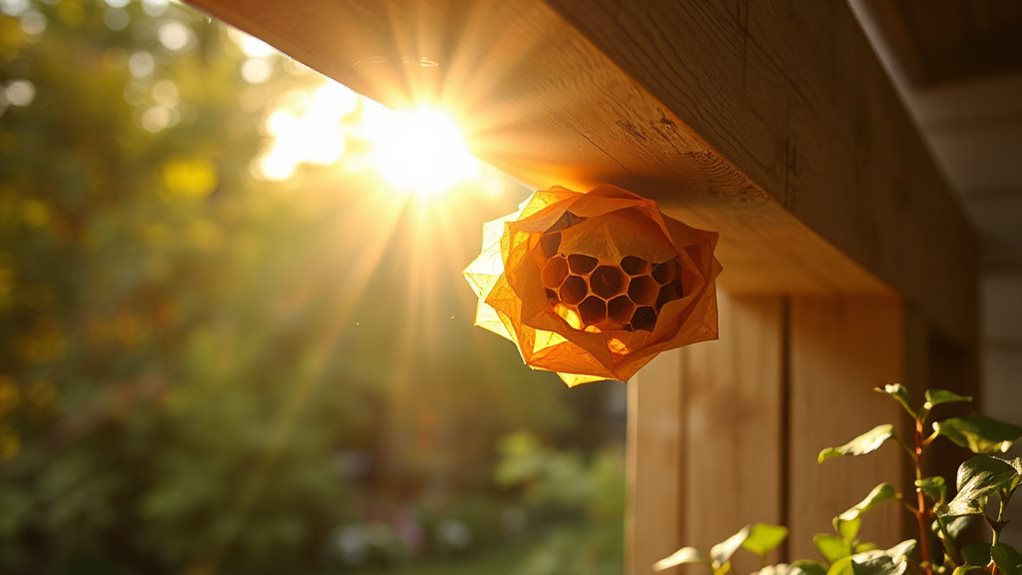
Ever wondered why a simple deck can turn into a wasp hotspot, and how you can fight back with nothing but kitchen staples and garden herbs? Mix two drops clove, geranium, or lemongrass oil per ounce water, spray edges, reapply often.
Plant mint, lavender, rosemary, or geraniums along borders.
Toss garlic, cucumber slices, or cinnamon sticks on railings.
Hang a fake nest 6‑8 ft high.
Stay proactive, keep guests safe.
When to Call a Pro for Deck‑Wasps Removal and What to Expect?
So, you’ve spotted a buzzing army nesting under your deck and wonder if it’s time to call in a pro—well, if the wasps are aggressive like yellow jackets, the nest is massive, or you’re allergic to stings, it’s definitely a signal to hand over the job to the experts.
Expect a single visit: inspection, spray or dust, protective gear, and removal, costing $100‑$1,300 depending on size and species, with average prices around $375‑$525.
Overall
Now you’ve got the scoop on why wasps love decks, how they turn them into buzzing hotels, and what to do before they crash your backyard party—so grab your favorite snack, check those corners, and if you spot a nest, act fast with safe removal tricks or call a pro, because a wasp‑free deck means more space for campfire stories, stargazing, and those epic summer escapades you’ve been dreaming about.